The Problem
No company context
AI tools write code without knowing your codebase, your specs, your stored procedures, your standards. Generic in, generic out.
Zero audit trail
Nobody knows what changed, by whom, against which spec, at what cost. When something breaks, the log is empty.
Knowledge stays siloed
The senior engineer's head is still the source of truth. The pipeline learns nothing. That person leaves, the knowledge walks out.
Pilot never becomes default
The shiny demo works. Then adoption stalls. The new way of working never replaces the old one.
Why AIDLC?
Faster delivery
Tens of dollars per feature, hours of elapsed time. Not weeks.
Built-in compliance
Every action audited. Every dollar attributed to an issue.
Institutional memory
The pipeline learns. The org's knowledge stops walking out the door.
Faster onboarding
New engineers ramp on a pipeline that already knows the codebase.
A pipeline that improves
Each cycle's retro feeds the next cycle's configuration.
Humans stay in control
Agents propose. Humans approve. Every merge is gated.
Problems
No company context
Zero audit trail
Knowledge stays siloed
Pilot never becomes default
Why AIDLC?
Faster delivery
Built-in compliance
Institutional memory
Faster onboarding
A pipeline that improves
Humans stay in control
OpenTelemetry:
Baked in, not bolted on
Auto-instrumentation of .NET and Java services → ADOT collector sidecars on EKS → AWS X-Ray for distributed tracing → CloudWatch for metrics and logs → custom dashboards and SLO alerting. All traces, metrics, and logs flow through a single OTel pipeline, swap backends without re-instrumenting.
VM → Container replatforming
Move off bare VMs onto EKS with proper orchestration, autoscaling, and workload isolation.
Custom metrics
Business and technical KPIs exported via OTel metrics SDK to CloudWatch and Managed Prometheus.
Structured logging
JSON-structured logs with trace correlation IDs, shipped to CloudWatch Logs Insights.
SLO alerting
Composite alarms and SLO burn-rate alerts wired from day one not as an afterthought.
What changes in your architecture
AWS Landing Zone & multi-account governance
AWS Control Tower
Security baseline
Identity & access
Network architecture
FinOps & cost governance
Compliance as code
Measurable results our clients achieve
60-80%
infrastructure cost reduction vs on-prem VMs
10x
faster deployments via GitOps pipelines
99.9%+
availability through EKS self-healing & multi-AZ
<5 min
MTTR with full OTel trace-to-log correlation
Case Study
Automative Industry Platform Development Journey on AWS
150%
performance Increase
67%
cost reduction
3
delivery phases
4
core AWS services
Who is Automative Customer?
Automative Customer sees itself as more of a provider of open mobility than a traditional automaker. When seen as a smart device, the automobile is just one of various modules. The platform serves as the digital backbone for the vehicle, enabling various features related this. This case study is to analyze the platform development journey of Automative Customer, in collaboration with Kloia, and explore the role of AWS in achieving their goals. It delves into the challenges faced, the solutions implemented, and the benefits derived from adopting AWS services. The methodology involves a comprehensive analysis of available resources, interviews with key stakeholders, and an examination of real-world examples.
Solution
Key Challenges in Automative Customer Platform Development
Automative Customer faced several challenges during the development of the platform, including limited internal expertise in cloud technologies, the need for scalable infrastructure, and strict security and compliance requirements. Additionally, the complexity of building a comprehensive platform within tight deadlines posed significant hurdles.Kloia's consultancy services played a pivotal role in helping team navigate the complexities of platform development. The collaboration with Kloia encompassed three key phases: initial assessment and planning, architecture design and development, and continuous integration and deployment.
Initial Assessment and Planning
Kloia conducted a thorough analysis of Automative Customer’s requirements, existing infrastructure, and business objectives. This assessment helped identify the optimal cloud strategy, define architectural patterns, and outline a roadmap for implementation with AWS Well-Arcitected framework compliance.Operational Excellence
Run, manage and monitor production workload to deliver business value and continuous improve on supporting process and events
Security
Protecting information, systems, and assets along from outside world with risk assessment, unplanned failures, and mitigation strategies
Reliability
Auto recover workload from infrastructure, power or system failures with dynamic resource management to meet operational threshold.
Performance Efficiency
Use computing resources efficiently to support on demand changes for delivering workload with maximum performance to meet the SLA
Cost Optimization
Avoiding & eliminate un-needed cost or replace resources with cost-effective resources without impacting the best practices and business need
Operational Excellence
Architecture Design
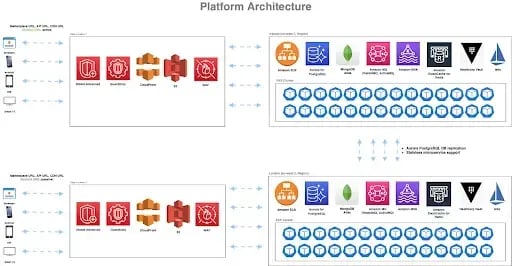
Kloia collaborated closely with TOGG's Trumore engineering teams to design a scalable and resilient architecture for the Trumore platform. They determined the appropriate infrastructure components, such as AWS services and containerization technologies, to meet TOGG's requirements for scalability, availability, and security.
Platform Development
Once the architecture was defined, Kloia's platform development team worked alongside TOGG to implement the Trumore platform. They utilized industry best practices and followed agile development methodologies to ensure the timely delivery of high-quality software components with AWS best practices.
Continuous Integration and Deployment with GitOps
To streamline the development and deployment process, Kloia implemented GitOps practices for the Trumore platform. GitOps is a DevOps methodology that utilizes Git as the source of truth for declarative infrastructure and application definitions. It enables a more automated and auditable approach to continuous integration and deployment.
Security
AWS Shield Advanced and WAF
To protect the Trumore platform from sophisticated DDoS attacks, TOGG implemented AWS Shield Advanced. This service provided comprehensive DDoS protection, including advanced threat intelligence and real-time mitigation. Additionally, AWS WAF was implemented to provide an additional layer of protection for the Trumore platform, filtering and blocking malicious traffic and protecting against common web application vulnerabilities and attacks.
Reliability
Amazon Elastic Kubernetes Service (EKS)
EKS provided TOGG with a fully managed Kubernetes service, allowing them to deploy, manage, and scale containerized applications. Kloia utilized EKS to simplify the deployment and management of microservices within the Trumore platform, ensuring high availability and scalability.
Amazon Aurora
Kloia recommended Amazon Aurora, a PostgreSQL-compatible relational database service, to meet Trumore’s requirements for a highly available and scalable database. Aurora offered enhanced performance, automated backups, and multi-region replication for data durability and availability.
Performance Efficiency
Event-Driven Communication and API Gateway
To facilitate communication and data exchange between microservices, an event-driven architecture was implemented. AWS messaging services such as Amazon MSK (Kafka) and Amazon MQ were leveraged for reliable and decoupled event-based communication. Kloia also implemented an API Gateway to provide a unified entry point for external clients to access the Trumore platform's functionalities.
Cost Optimization
AWS Managed Services
By leveraging AWS-managed services such as EKS and Aurora, TOGG achieved cost optimization through reduced infrastructure management overhead and efficient resource utilization. The pay-as-you-go model of AWS services helped TOGG align costs with actual usage.
AWS Technologies Utilized
Kloia leveraged various AWS services to meet requirements for the platform. These services included AWS Elastic Kubernetes Service (EKS) for container orchestration, Amazon Aurora for highly available and scalable relational databases, AWS Shield Advanced for advanced DDoS protection, and AWS Web Application Firewall (WAF) for application-layer security.
Amazon Elastic Kubernetes Service (EKS)
EKS provided Automative Customer with a fully managed Kubernetes service, allowing them to deploy, manage, and scale containerized applications. Kloia utilized EKS to simplify the deployment and management of microservices within the platform, ensuring high availability and scalability.
Amazon Aurora
Kloia recommended Amazon Aurora, a PostgreSQL-compatible relational database service, to meet project’s requirements for a highly available and scalable database. Aurora offered project enhanced performance, automated backups, and multi-region replication for data durability and availability.
AWS Shield Advanced
To protect the platform from sophisticated DDoS attacks, Automative Customer implemented AWS Shield Advanced. This service provided comprehensive DDoS protection, including advanced threat intelligence and real-time mitigation, ensuring the platform's availability and performance during cyber attacks.
AWS Web Application Firewall (WAF)
Kloia implemented AWS WAF to provide an additional layer of protection for the platform. WAF allowed Automative Customer to define custom rules to filter and block malicious traffic, protecting the platform from common web application vulnerabilities and attacks.
Implementation of the Platform
Platform Development Practices
Kloia, in collaboration with Automative Customer, followed modern platform development practices to implement the platform. These practices focused on building a scalable, modular, and extensible platform architecture that enables easy integration of new features and components.
Microservices Architecture
The Platform was designed as a collection of microservices, each responsible for specific business functionalities. Kloia utilized AWS EKS and containerization technologies to deploy and manage these microservices. The microservices architecture offered several advantages, including scalability, fault isolation, and independent deployment of individual services.
Event-Driven Communication
To facilitate communication and data exchange between microservices, an event-driven architecture was implemented. This approach allowed services to communicate asynchronously through events, promoting loose coupling and scalability. AWS messaging services such as Amazon MSK (Kafka) and Amazon MQ were leveraged for reliable and decoupled event-based communication.
API Gateway and Service Mesh
Kloia implemented an API Gateway to provide a unified entry point for external clients to access the platform's functionalities. The API Gateway served as a central point for authentication, authorization, and routing of requests to the appropriate microservices. Additionally, a service mesh, implemented using istio, enhanced observability and control over service-to-service communication within the platform.
Data Storage and Management
Kloia designed a data storage and management strategy that catered to the requirements of the platform. Amazon Aurora was utilized as the primary database for structured data, providing scalability, high availability, and durability. Additionally, Amazon S3 was employed for storing and managing large volumes of unstructured data, such as multimedia assets.
Observability and Monitoring
Effective observability and monitoring were key aspects of the platform's implementation. Kloia leveraged AWS services like Amazon CloudWatch, AWS Cloudtrail and AWS Grafana to collect and analyze logs, metrics, and traces. This allowed for real-time monitoring of system performance, identification of bottlenecks, and troubleshooting of issues.
Continuous Integration and Deployment (CI/CD)
To ensure a smooth and reliable development workflow, Kloia implemented robust CI/CD pipelines for the platform. The pipelines were configured to automatically build, test, and deploy new code changes using GitOps practices. This enabled the development team to iterate rapidly, ensuring the delivery of high-quality software with minimal manual intervention.
Infrastructure as Code (IaC)
Infrastructure as Code was adopted to define and provision the required AWS resources for the platform. Kloia utilized tools like terragrunt and terraform to codify infrastructure configurations. This approach allowed for consistent and reproducible infrastructure deployments and simplified the management of the platform's infrastructure.
By following platform development practices, Automative Customer and Kloia created a scalable, modular, and robust platform. The microservices architecture, event-driven communication, API Gateway, service mesh, and effective data storage strategies ensured the platform's flexibility, scalability, and maintainability. The implementation of observability and monitoring practices enabled proactive identification and resolution of issues, ensuring optimal performance and reliability. The adoption of CI/CD pipelines and Infrastructure as Code streamlined the development and deployment processes, resulting in faster time-to-market and efficient resource management.
Achievements and Benefits
Scalability and High Availability
The utilization of AWS EKS and Amazon Aurora allowed the platform to scale effortlessly to accommodate increasing user demand. EKS's auto-scaling capabilities and Aurora's replication across multiple availability zones ensured high availability and performance.
Cost Optimization
By leveraging AWS-managed services such as EKS and Aurora, Automative Customer achieved cost optimization through reduced infrastructure management overhead and efficient resource utilization. Additionally, the pay-as-you-go model of AWS services helped Automative Customer align costs with actual usage.
Security and Compliance
Automative Customer enhanced the platform’s security posture by implementing AWS Shield Advanced and AWS WAF. These services provided advanced DDoS protection and application-layer security, ensuring the confidentiality, integrity, and availability of user data.
Developer Productivity
The adoption of AWS EKS and containerization techniques with GitOps practices improved developer productivity for Automative Customer's engineering teams. Containerization simplified the development, deployment, and scaling processes, enabling faster iterations and reducing time-to-market for new features.

Results
Through this partnership, Automative Customer achieved scalability, high availability, cost optimization, security, and developer productivity. The Platform stands as a testament to the power of strategic partnerships and cutting-edge technologies in driving innovation in the automotive industry. The successful implementation of the platform has positioned Automative Customer as a leader in the domestic electric vehicle market, paving the way for future advancements and growth.
Some of our results:
152%
Performance Increase
67%
Cost Reduction
Case Studies
Open-Source Observability Transformation on AWS