
Search:

Eleven Plus Preparation with AI Product Deployment

boost-ai-casestudy

Situation

Getting ready for the Eleven Plus test in the UK is hard work, especially for kids ages 10 to 11. It's not just about finding the right answer; it's also about knowing how to solve problems.

But the solutions that were already in place weren't working.

A lot of the time, students knew the right answers but had trouble understanding why they were right. But teachers didn't have the time to help each student one-on-one.

As time went on, a few important problems became clear:

- Students were memorizing instead of understanding.
- Feedback was late or not there at all* Teachers didn't have a clear, data-driven picture of how well their students were doing.
- There weren't many practice materials, and they were all the same.

Because of this, the learning process wasn't getting better in a way that made sense or could be used by a lot of people.

Task

The goal was to come up with a solution that could:

- Give each student: step-by-step, personalized help
- Give: instant and relevant feedback
- Allow for "active learning" instead of "passive consumption"
- Make it easy for teachers to see how well their students are doing
- Grow in a way that doesn't make you more reliant on one-on-one teaching

In short, the job was to rethink how to get ready for the Eleven Plus test from both the student and the teacher's points of view.

Client: BoostAI

Project type: AI Product Deployment

Website: boostailab.com

Action

To deal with these problems, we worked with the customer to create a learning experience powered by AI that was made just for this situation.

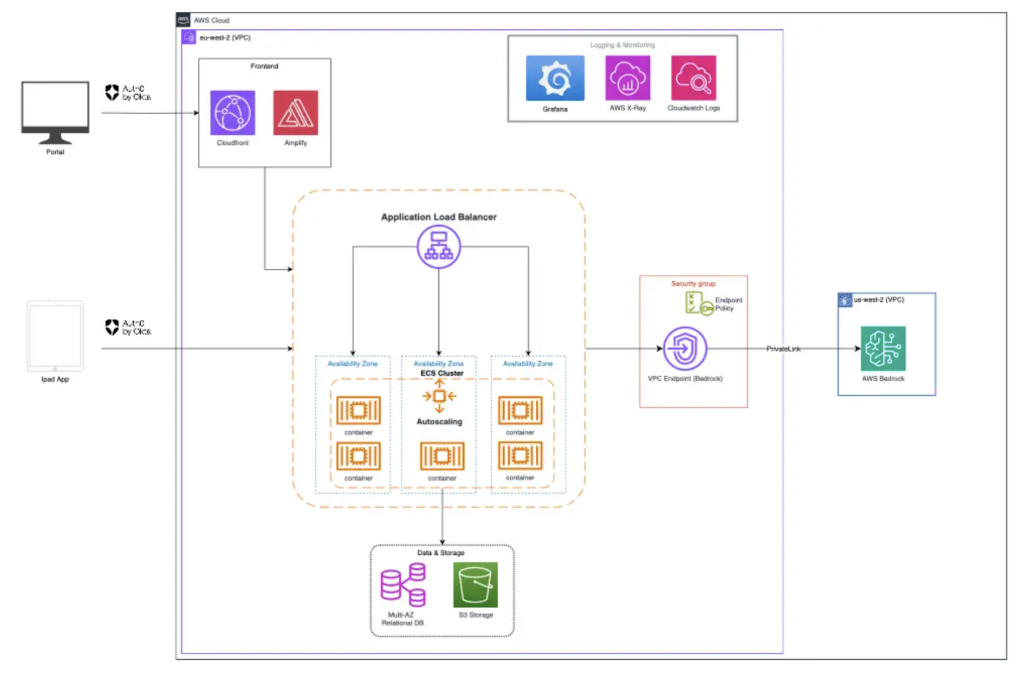
We made an iPad app that runs on AWS Bedrock and is based on a simple but powerful interaction: Students can get help right away by taking a picture of a question.

After that, the system gives you several ways to get involved:

- Seeing the answer right away: Looking into a full, step-by-step explanation
- Working together to solve the problem with help along the way
- Making similar questions to practice more

The solution included the following technical parts:

- AWS Bedrock for flexible LLM orchestration
- Techniques for few-shot learning and iterative prompt engineering
- An OCR pipeline to work with inputs that are pictures
- A guardrail layer to make sure the answers are safe and right for the age

We also built the platform with three types of users in mind:
- Students (what they learn)
- Teachers (insights into performance)
- Admins (managing the system)

This structure made it possible for the system to be both easy to manage and scalable.

boostai-kloia-casestudy-solution
boost-ai

Results

The effect was both immediate and measurable.

Students started solving problems faster, and more importantly, they started to understand them better.

We saw:

- Higher rates of success on the first try
- Better memory over time
- More practice engagement

One of the most important results was the change from limited, static content to "on-demand question generation," which gave students almost unlimited chances to practice.

From a more general point of view:

- Personalized learning became possible for more people
- Teachers could easily see how well their students were doing.
- Interventions became more focused and worked better
- The overall learning experience became more stable

Final Thoughts

It wasn't just about making an AI tool for this project.

It was about making a system that helps students not only answer questions but also think.

That change made all the difference.

Contact